
Roatan’s Fascinating History: Pirates, Payans & An Island That Refused to Be Tamed
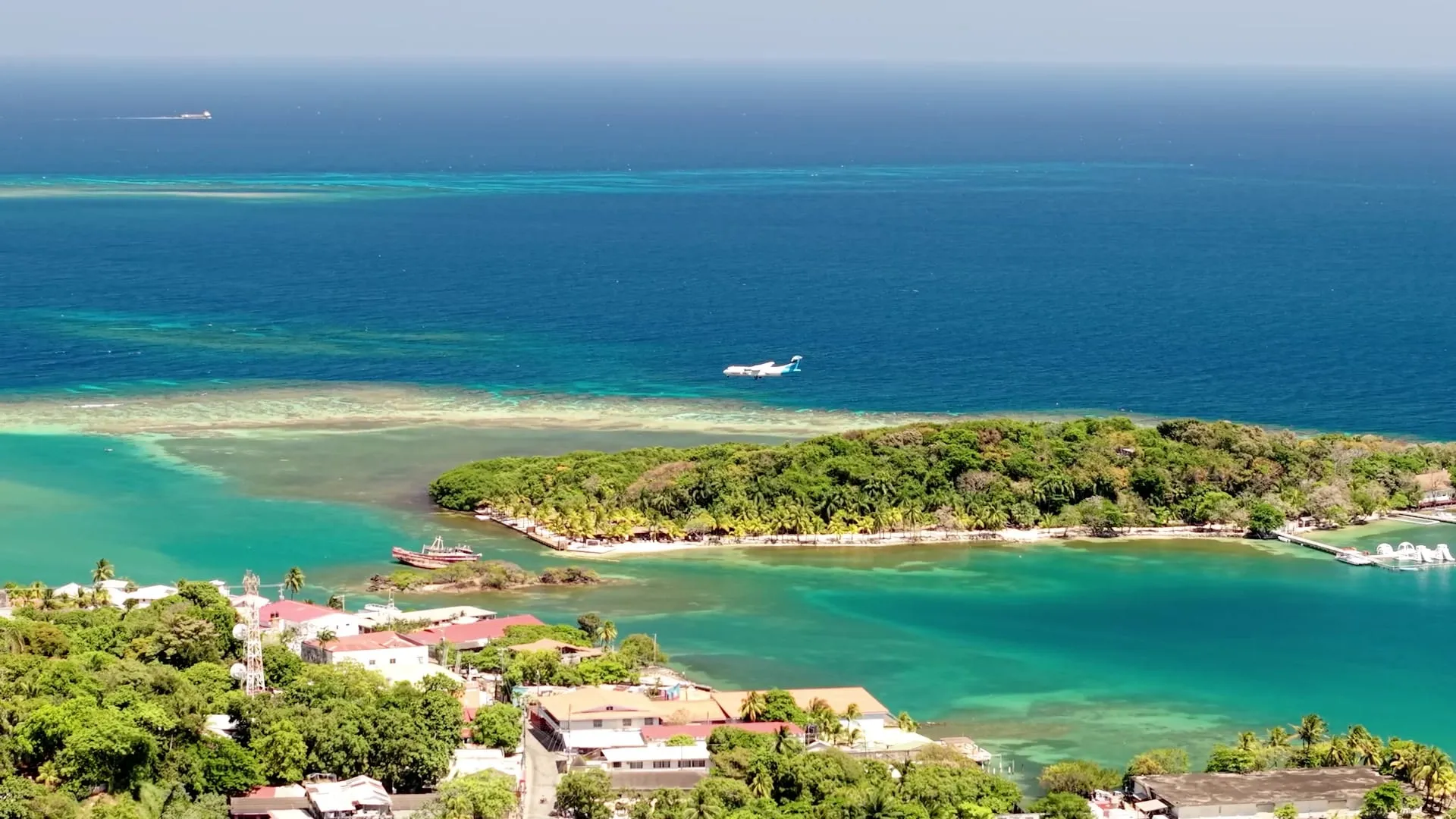
Most people discover Roatan real estate through a travel article, a friend’s vacation photos, or a quiet afternoon spent daydreaming about a different kind of life. What catches them first is usually the water, that impossible shade of blue-green that doesn’t look real until you’re standing in it. The truth that surprises almost everyone who digs a little deeper: Roatan’s history is just as extraordinary as its scenery. And understanding it changes how you see the island.
This is not a place that was quietly discovered and gently settled. Roatan was fought over, claimed, abandoned, reclaimed, and shaped by some of the most colorful characters in Caribbean history. The same qualities that made it irresistible to Payan traders, Spanish conquistadors, English colonists, and pirates (its location, its natural harbors, its beauty, its wildness) are the same qualities that draw adventurous expats and lifestyle buyers here today.
BEFORE COLUMBUS: THE PAYAN ROOTS OF ROATAN ISLAND
Long before any European set foot on Roatan, the island was home to the Payans, also known today as the Paya or Pech. Believed to have arrived on the island around 600 AD from the Honduran mainland, the Payans lived on Roatan for more than a thousand years before European contact. They were skilled fishermen, farmers, and seafarers who built a sophisticated island culture shaped by the sea.
Archaeological evidence suggests the Payans of the Bay Islands were not isolated. They were active participants in a regional trade network that stretched across the Caribbean coast of Central America, exchanging goods with the Maya to the north and other Mesoamerican peoples. Roatan’s protected bays and abundant marine life made it a natural waypoint for traders moving between the Yucatan Peninsula and the South American mainland.
When Christopher Columbus arrived during his fourth and final voyage in 1502, he described encountering a large trading canoe off the coast of the Bay Islands, loaded with cacao, copper bells, wooden swords edged with obsidian, and colorful cloth. It was, by his own account, one of the more remarkable encounters of his entire journey. The indigenous people of Roatan were not isolated subsistence farmers. They were participants in a sophisticated regional economy that had been operating long before Europe knew this part of the world existed.
Tragically, the Payans were devastated by Spanish enslavement and European-borne diseases like smallpox and measles. Most survivors were forcibly relocated to the mainland during the early colonial period, where their descendants, the Pech, still live today in communities in Olancho, Colón, and Gracias a Dios.
For anyone considering buying property in Honduras today, that heritage matters. The island’s long history of being a crossroads of trade, of culture, of peoples from vastly different backgrounds, is baked into its character. Roatan has always been a place where different worlds meet.
THE PIRATE ERA: WHEN ROATAN WAS THE MOST DANGEROUS ADDRESS IN THE CARIBBEAN
Here is where Roatan’s history gets genuinely cinematic. By the mid-1600s, the island had become one of the most significant pirate bases in the entire Caribbean. At its peak, Roatan was home to more than 5,000 buccaneers who used its deep natural harbors and hidden coves to shelter their ships, repair their vessels, and plan raids on Spanish merchant fleets moving treasure back to Europe.
The most famous of these was Captain Henry Morgan, the Welsh privateer who used Roatan as a staging ground for some of his most audacious Caribbean operations before going on to sack Panama City in 1671. But perhaps no pirate left a more lasting mark on the island’s identity than Captain John Coxen. The island’s capital city, Coxen Hole, bears his name to this day, a reminder that the people who shaped Roatan did not go quietly into history. They named things after themselves and they stayed.
If you explore Roatan today, you can still find pirate caves tucked into the island’s limestone bluffs, particularly around the Port Royal area on the eastern end. They are not tourist traps or reconstructions. They are actual remnants of an era when this island was, quite literally, a lawless Caribbean stronghold. That physical connection to history is part of what makes the properties we work with feel so different from a cookie-cutter resort development. The island has earned its character the hard way.
THE BATTLE FOR ROATAN: SPAIN, ENGLAND, AND AN ISLAND WORTH FIGHTING OVER
The Spanish and the English both understood what the pirates already knew: Roatan was strategically valuable. Its location in the western Caribbean, relatively close to the Honduran mainland, made it an ideal base for projecting power across the region. So they fought over it, repeatedly, and for more than a century.
In 1650, Spain launched a major assault on Port Royal in an attempt to drive the pirates and English colonists from the island. After years of skirmishes and sieges, the pirates eventually surrendered. Less than a hundred years later, the English were back, reestablishing a settlement at Port Royal in the 1740s, only to cede the island to Spain again under the terms of the Treaty of Paris in 1763. Power changed hands at least four times over the course of the 17th and 18th centuries, and each transition left its mark on the island’s culture, language, and people.
What emerged from all of this contested history was something genuinely unique: a Caribbean island where English became the dominant language despite being governed as part of Spanish-speaking Honduras. That linguistic legacy persists today, and it is one of the reasons so many North American and European expats feel surprisingly at home from the moment they arrive. According to International Living, Roatan consistently ranks as one of the top Caribbean retirement and relocation destinations for North Americans, and the island’s deep English-speaking roots are a big part of why. The expat life in Roatan does not feel foreign in the way that other expat destinations sometimes can.
THE GARIFUNA: ROATAN’S MOST ENDURING CULTURAL LEGACY
No account of Roatan’s history is complete without the Garifuna. Their story is unlike anything else in the Caribbean. The Garifuna are a people of mixed Afro-Caribbean and indigenous Arawak ancestry who trace their roots to the island of St. Vincent, where free Africans and indigenous Caribs created a new community over generations. When the British defeated the Garifuna in 1796 after years of armed resistance, they deported them, exiling thousands to the coast of Central America in 1797.
Many of those exiles settled in Roatan. The Garifuna brought their language, their music, their food, and their spiritual traditions with them, and they have maintained all of it for over two centuries. Today, the Garifuna community is one of the most vibrant parts of Roatan’s cultural identity. UNESCO recognized the Garifuna language, dance, and music as Intangible Cultural Heritage of Humanity in 2001. When you live on this island, that heritage is not a museum exhibit. It is alive, present, and woven into the daily fabric of life here.
THE BOTTOM LINE: HISTORY IS WHY ROATAN FEELS THE WAY IT DOES
When people ask why Roatan feels different from other Caribbean islands, or why it has a depth and a character that is hard to put into words, the honest answer is: history. This is an island that has been shaped by extraordinary forces over many centuries. The Payans, the pirates, the Spanish, the English, the Garifuna, and generations of Honduran families all left something behind. And now, a new generation of international residents is becoming part of that story.
The people who thrive here are not looking for a resort experience. They are looking for a real place, with real roots, that will reward genuine curiosity and genuine engagement. That is exactly what Roatan offers. And if you are researching homes for sale in Roatan right now, that context matters more than you might think. You are not just buying property. You are joining an island with a story more than a thousand years in the making.
There is no single right answer to whether Roatan is right for you. But if the history we have shared here resonates, if the idea of a place with this much layered character genuinely appeals, that is worth paying attention to. The island tends to attract the bold. It always has.
We have spent years on this island helping buyers find not just a property, but a place that genuinely fits. If Roatan’s history and character speak to you, we would love to help you explore what is possible. Let’s start the conversation.
FAQ’s
FAQ’s
Q: What is the history of Roatan, Honduras?
A: Roatan has a layered and fascinating history stretching back over a thousand years to the Payans (also known as the Paya or Pech), who settled the island around 600 AD. When Christopher Columbus arrived in 1502, he encountered a thriving indigenous population that was part of a broader regional trade network connecting Central America and the Caribbean. In the centuries that followed, Roatan became a stronghold for English and Spanish colonists, a base of operations for Caribbean pirates, and eventually a melting pot of cultures that still defines the island today.
Q: Were there really pirates in Roatan, Honduras?
A: Yes. At its peak, Roatan was home to more than 5,000 pirates who used the island as their primary base of operations in the Caribbean. Famous pirates including Henry Morgan and Captain John Coxen operated from Roatan. In fact, the island’s capital city, Coxen Hole, is named after Captain Coxen himself.
Q: Who were the original inhabitants of Roatan?
A: The original inhabitants of Roatan were the Payans (also known as the Paya or Pech), an indigenous people who settled the island around 600 AD and lived there for over a thousand years before European contact. While the Bay Islands served as an important waypoint in regional trade networks that connected them with the Maya and other Mesoamerican cultures, Roatan itself was primarily Payan territory. When European colonization began in the 1500s, the native population was severely disrupted by disease, enslavement, and forced relocation to the Honduran mainland. Over the following centuries, a mix of English colonists, Spanish settlers, freed African slaves, and the Garifuna people, a unique Afro-Caribbean community, all made Roatan their home, creating the diverse cultural fabric the island is known for today.
Q: Why do expats and lifestyle buyers choose to live in Roatan?
A: Roatan appeals to expats and lifestyle buyers for the same reasons it attracted explorers, settlers, and adventurers for centuries: its natural beauty, strategic Caribbean location, and a community of people drawn to something different. Today, that translates to a warm, welcoming expat community, affordable cost of living relative to other Caribbean islands, accessible foreign property ownership, and a laid-back island culture rooted in genuine history.
Q: Is Roatan a good place to live as a foreigner?
A: Roatan is consistently ranked as one of the top destinations in the Caribbean for expat living. Foreigners can legally own property in their own name, the cost of living is lower than comparable Caribbean islands, English is widely spoken, and the island has a well-established international community. Its rich history and cultural diversity make it a place that rewards those who take the time to truly know it.